Modern cinema and television adaptations of foundational works are a minefield of factual-inaccuracy, with post-modern, intersectional insertions.
I didn’t go to see Ridley Scott’s ‘Napoleon’ in theatre because the trailers and clips aired before its release failed to convince me.
The analyses by historians such as Thierry Lentz and Patrice Gueniffey reinforced my impression by highlighting the numerous liberties taken with the facts, not to mention the glaring historical errors. For this reason, I chose not to see this film in theaters.
I have since seen this film and awful is the best descriptive word I can think of, on par with Oliver Stone’s ‘Alexander.’
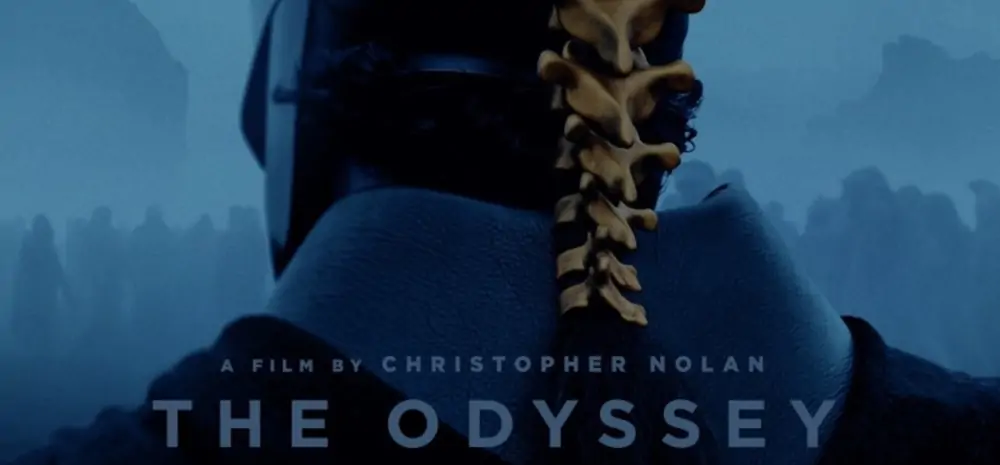
In a similar way and for similar reasons, I did not see Christopher Nolan’s ‘The Odyssey’ in theatres, either.
Batmagamemnon, it turned out, was but the apéritif.
An adaptation is naturally free to interpret a work, but in my view, that freedom has its limits when it profoundly alters constitutive elements of the narrative or its cultural universe.
The Coen brothers film ‘O Brother, Where Art Thou’ was a (limited) thematic adaptation of Homer’s Odyssey and ‘Ulysses’ by James Joyce, similarly restricted; neither were presented as a holistic retelling retaining cultural elements and characters, and the thematic aspects of the original work left for the audience/reader to discover and comprehend.
Christopher Nolan’s film is not to be confused with either of these examples and its problems are manifold.
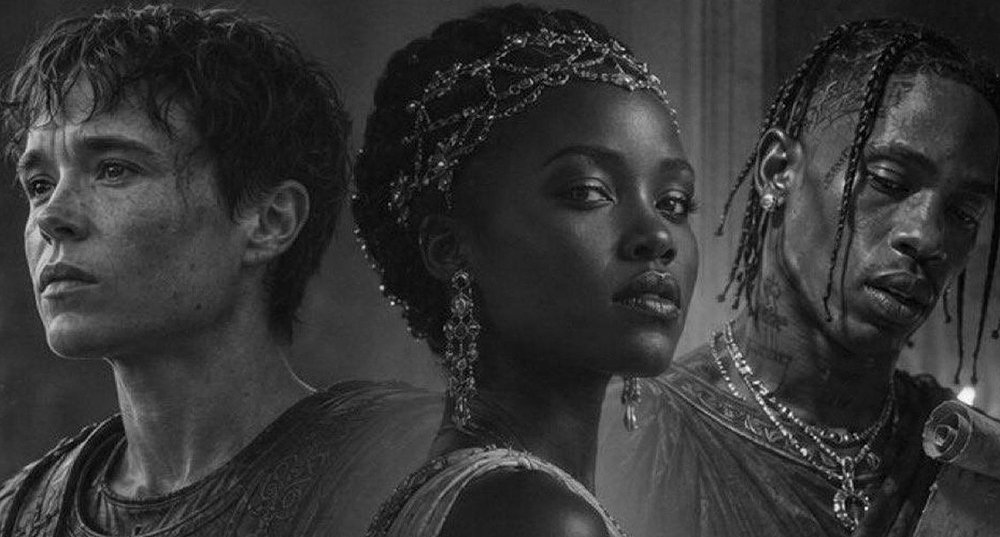
Casting choices can stem from a legitimate artistic approach. However, when they stray from the representation traditionally associated with characters from a foundational work, some may feel that the coherence of the original imaginary is weakened, or even completely distorted.
In the case of Helen of Troy, an emblematic figure of Greek mythology, I believe that fidelity to the iconographic and cultural tradition also contributes to respecting the adapted work.
This reflection is not, in my eyes, a matter of hierarchy between cultures or individuals, but a principle of coherence.
If a film about Kunta Kinte or Shaka Zulu cast Brad Pitt or Matt Damon in the lead role, I wouldn’t want to see it any more than this one, as I’d see it as a break with the historical and cultural identity of the characters portrayed. John Wayne as Genghis Khan remains ridiculous. Ben Kingsley as Gandhi is… passable… but it’s crying out for a remake.
Likewise, it would have been hard to imagine Sydney Sweeney, for example, playing the Queen of Sheba without raising the same questions. The principle is universal. Adaptations gain credibility when they seek to preserve the historical, cultural, or mythological identity of the figures they bring to the screen.
At foundation, the question goes beyond the mere framework of cinema. It points to an age-old philosophical debate: how far can a work be reinterpreted without losing its identity?
For my part, I believe that creativity does not preclude respect for the original work. Quite the contrary: artistic creativity reaches its highest level when it respects the spirit of the original work, rather than bending it to dubious ideological considerations.
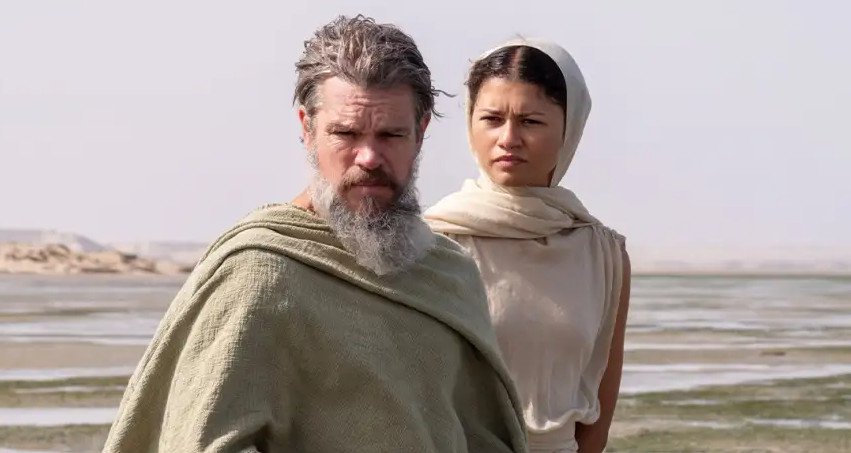
Most people complaining about the casting in Nolan’s Odyssey perhaps don’t fully understand what they’re objecting to because it’s deeper than they realise.
The unease they feel runs deeper than superficial complaints about ‘realism’ or skin tone. What they likely can’t articulate is their objection to universalising the particular; an error characteristic of philosophical liberalism.
The Odyssey is not a universal story.
It is not a detachable ‘hero’s journey’ that can be stripped of its cultural origins and modernised for contemporary audiences. Its power lies in its particularity. The audience must do the work of closing the gap; the text does not come to us… we must go to it.
The values that animate it, xenia (reciprocal guest-friendship), oikos (the household and its obligations), mētis (cunning intelligence), kleos (glory), and timē (honour), are not interchangeable with modern liberal abstractions. They are embedded in a specific ancient Greek moral and social world. They are not timeless ‘human themes’ floating free of context.
This is why the Odyssey functions today primarily as an educational text rather than popular entertainment, as it once did. It belonged to the moral universe of ancient Greece. It does not belong to ours. Its value lies precisely in its alienness: it forces us to encounter a distinct way of thinking about justice, loyalty, hospitality, and human excellence.
When critics complain that an adaptation ‘isn’t realistic’, they are grasping for the most accessible language to express a deeper discomfort. What actually bothers them, I suspect, is the erosion of cultural fidelity; the required deracination for modern audiences stripping it of its required context, which in turn strips it of all of the value that it contains.
A universal Odyssey has no value.
In attempting to globalise the Odyssey, they erase what remains of an already dead culture; killing even its ghost. Ancient Greece is gone, yet we have preserved its artifacts and stories not because they resemble us, but because they are different. The point of engaging with them is to contend with what is foreign, not to replace it with comforting modernity.
Ancient Greece is remarkable, horrifying, marvelous, repulsive, and admirable all at once. It is not a culture most of us would want to inhabit, but it is one from which we still benefit by struggling to understand it on its own terms. Turning it into a generic vehicle for contemporary sensibilities performs a kind of reverse alchemy: it transforms something rare and demanding into something familiar and undemanding, thus making gold into lead.
I have now seen the film. Despite my misgivings, I began to watch expecting (hoping) Homer’s world to breathe: salt in the air, darkness over the sea, gods watching from a distance, and a wounded man struggling to return home.
Instead, ancient Greece vanished beneath a cold and generic Hollywood spectacle.
The characters felt like modern actors wearing ancient costumes. The dialogue had no poetry, the casting carried none of the story’s identity, and the deepest themes of exile, loyalty, grief and homecoming were buried beneath noise and expensive images.
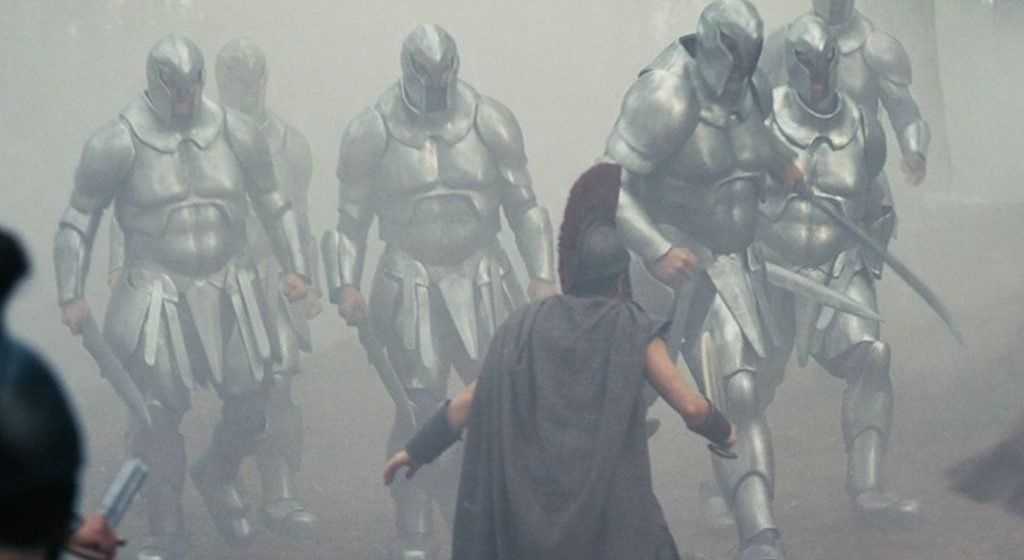
The Odyssey is not really about monsters; the Cyclops, the Sirens and the storms are only the visible dangers. The true journey takes place within Odysseus himself. It asks whether a man can lose his companions, his youth, his name and twenty years of his life, yet still return without losing the person he once was.
That is why the story has survived for almost 3,000 years; a remarkable achievement. Every human being is arguably trying to return to something: a home, a love, an identity, or the self they were before life changed them.
A $250 million production somehow made one of humanity’s greatest meditations on memory, mortality and belonging feel empty. Hollywood borrowed Homer’s name and prestige, but abandoned the soul that made his story immortal.
This was not The Odyssey. It was a monument to money, arrogance and the belief that spectacle can replace meaning.
Nolan’s Odyssey is not a return to tradition, instead it’s the perfect symbol of the spirit of our age. They’ve hollowed out Homer’s Odyssey, sucked out it’s heart and soul, and filled it with the darkness and post-modernism of our time.
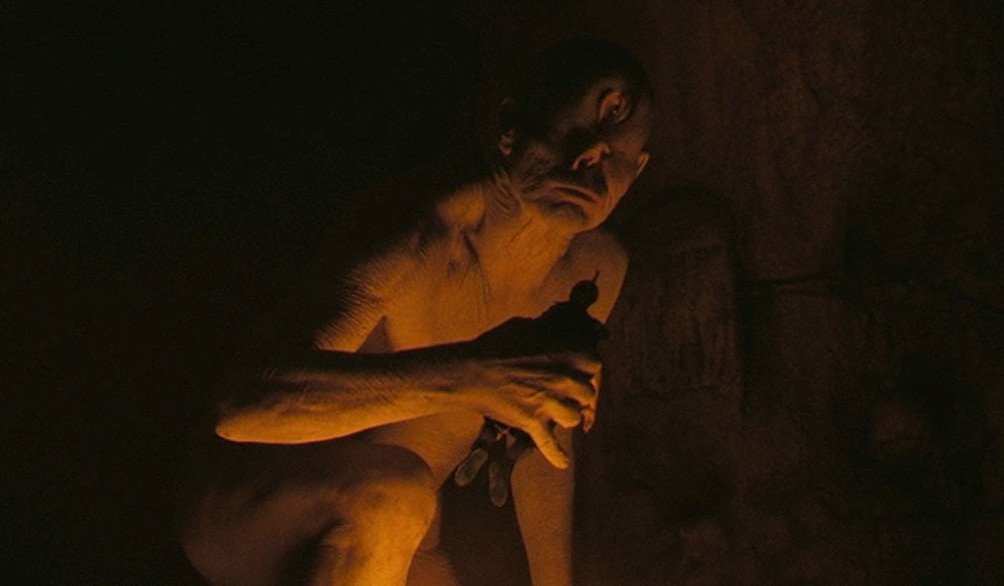
They use the iconography of Western Civilisation: art, literature, sports, film, and even Christianity, and suck out what is good and true about them, then fill them with the demonic, and present them to us as a gift.
We accept them because they wear the veneer of what we love, what we value and worship, we take them into our homes… and that’s how they’ve destroyed us.
There’s a dark and twisted irony that they chose the Odyssey, an icon of what built our civilization, to use as a Trojan horse to destroy us.
They wear our cultural icons like a skin suit to fool us, but what’s inside is demonic and should be regarded as our enemy.